
Research shows that small businesses that actively engage in digital marketing efforts experience up to 2.8 times higher revenue growth compared to those without a strategy.
Source: Digital Delane
A well-thought digital marketing strategy can help your small retail business increase its visibility, engage with local communities better, and build a loyal customer base. By focusing on targeted SEO efforts and leveraging social media, your small business can effectively compete and thrive in an increasingly digital world. Learn more about how to develop a comprehensive plan with our Digital Marketing Complete Guide.
Introducing Digital Marketing Strategy for Your Retail Business
A recent report by The Irish Times, shows that in the first half of 2024 there was a notable increase in business failures across Ireland. With rising operational costs and shifting consumer behaviours, small businesses are finding it increasingly difficult to sustain growth. In such a challenging environment, a well-executed digital marketing strategy isn’t just an option—it’s a necessity.
By leveraging digital tools and emerging platforms, businesses can expand their reach, engage new customers, and create more resilient revenue streams, ultimately improving their chances of survival.
In this post, we’ll explore why a digital marketing strategy is crucial for small retail businesses and how it can help you attract more customers, increase sales, and build a loyal customer base.
Changing Retail Landscape

Recent statistics show a significant shift towards online shopping, with over 57.7% of internet users aged 16 to 64 in the US shopping online each week as of 2022. This trend reflects a broader global movement, where digital platforms have become essential for both consumers and businesses.
Source: Tidio, FinMasters
Digital Marketing Strategy – The Shifts in Consumer Behaviour from Brick-and-Mortar Towards Online Research and Shopping
Over the past decade, there has been a significant shift in consumer behaviour, driven largely by advancements in technology and the increasing availability of the internet.
This shift has fundamentally changed how consumers research products, make purchasing decisions, and shop, with a growing preference for online platforms over traditional brick-and-mortar stores.
1. Growth of E-commerce
E-commerce has seen exponential growth, especially in the wake of the COVID-19 pandemic, which accelerated the adoption of online shopping and a wave of crisis marketing. Consumers have become increasingly comfortable with purchasing a wide range of products online, from groceries to luxury goods. In 2023, global e-commerce sales were projected to reach $6.3 trillion, highlighting the dominance of online shopping in today’s marketplace.
- Impact.
- For small retail businesses, this trend underlines the need to establish a strong online presence and a digital marketing strategy. Without a digital storefront, businesses risk losing out on a significant portion of the market.
2. Mobile Shopping on the Rise
Mobile devices have become a primary tool for consumers to research products and make purchases. According to data, over 50% of global e-commerce sales now occur on mobile devices, a trend driven by the convenience and accessibility of smartphones.
- Impact.
- This shift means that businesses must optimise their websites for mobile use, ensuring that the shopping experience is seamless, fast, and user-friendly.
- Mobile-responsive design, fast loading times, and easy navigation are critical to capturing and retaining mobile shoppers.
3. The Role of a Digital Marketing Strategy and Online Research in Decision-Making
Before making a purchase, today’s consumers typically conduct extensive online research. This includes reading reviews, comparing prices, and seeking out detailed product information. A report from Think with Google revealed that 87% of shoppers begin product searches online, underscoring the importance of having accurate and compelling content available.
- Impact.
- Small businesses need to focus on content marketing and SEO to ensure that their products and services are easily discoverable online.
- This includes optimising product descriptions, leveraging customer reviews, and creating informative blog posts or videos that address consumer questions and concerns.
4. Influence of Social Media on Shopping Habits
Social media platforms have become key influencers in the purchasing process. Consumers frequently turn to platforms like Instagram, Facebook, and Pinterest for inspiration, reviews, and even direct purchases through social commerce features. In 2023, it was estimated that social commerce sales would reach $1.3 trillion globally.
- Impact.
- To stay competitive, businesses need to engage with their audience on social media, create shoppable posts, and leverage influencer partnerships to drive traffic and sales.
- Social proof, such as customer reviews and testimonials, can also significantly impact purchasing decisions.
5. Personalisation and Convenience
Consumers increasingly expect personalised shopping experiences tailored to their preferences. They appreciate recommendations based on past purchases, targeted ads, and personalised email campaigns. Convenience is also paramount, with services like next-day delivery, click-and-collect, and easy returns becoming standard expectations.
- Impact.
- Businesses must invest in data analytics and customer relationship management (CRM) tools to offer personalised experiences.
- Understanding customer behaviour and preferences can lead to more effective marketing strategies and higher conversion rates.
Benefits of a Digital Marketing Strategy for Small Retail Businesses

Companies with a strong digital presence see a significant increase in customer engagement, often doubling their interaction rates compared to those without such strategies.
Increase Visibility and Reach Your Audience
In today’s digital age, the success of local businesses hinges on their ability to be seen by the right people at the right time. Two of the most effective ways to achieve this are through Search Engine Optimisation (SEO) and social media engagement. Let’s dive into why these strategies are crucial and how they can help you connect with your community and boost your business. Incorporating local marketing tactics can help businesses connect with nearby customers and build a loyal community.
The Importance of SEO for Local Businesses
Imagine you’re a small boutique owner in Cork. You’ve put so much effort into curating a beautiful collection of clothes and accessories, but what good is that if people in your area can’t find you? This is where local small business SEO comes into play.
Local SEO is all about making sure your business shows up when potential customers in your area are searching online for products or services you offer.
Whether someone is typing “best boutique in Cork” into Google or asking Siri where they can find “affordable luxury rings near me,” including local SEO in your digital marketing strategy ensures that your business is right there in the mix, ready to be discovered.
But, it’s not just about showing up—it’s about standing out. A well-optimised website with local keywords, accurate business listings, and positive customer reviews can push you to the top of search results.

Being at the top matters—studies show that the first three search results get over 60% of all clicks. Without local SEO, you risk being buried beneath competitors, losing out on valuable foot traffic and sales.
In short, local SEO is like putting a bright, blinking sign above your store in the digital world. It tells people who you are, where you are, and why they should choose you over anyone else. For local businesses, it’s not just important—it’s essential.
Using Social Media to Engage with Local Communities and Customers
While SEO gets customers to your door, social media is what keeps them coming back. Today’s consumers want more than just a transaction—they want a connection. They want to know the faces behind the brand, the stories behind the products, and they want to feel like they’re part of something bigger. This is where social media shines.
Platforms like Facebook, Instagram, and Twitter aren’t just for sharing cat videos or holiday snaps—they’re powerful tools for building relationships with your local community. By regularly posting updates, sharing behind-the-scenes content, and engaging with followers, you can turn casual browsers into loyal customers.
Let’s say you run a local jewellery store. You can use Instagram to showcase your latest designs, share customer stories, or even highlight local events you’re involved in.
Or, consider Facebook—a place where you can join local community groups, participate in conversations, and share valuable content that resonates with your audience. The key is to be authentic and consistent.

Businesses that use Google Analytics to drive their marketing strategies see an average of 30% higher conversion rates due to informed decision-making.
But social media isn’t just about broadcasting—it’s about listening and responding. When a customer comments on your post or sends you a message, it’s an opportunity to build trust and show that you care. Responding promptly to inquiries, addressing concerns, and thanking customers for their support can turn a one-time buyer into a lifelong advocate.
Moreover, social media allows you to tap into the power of word-of-mouth marketing. When happy customers share their experiences with your business, it’s like a digital version of telling their friends and family about you. This kind of organic promotion is invaluable and can significantly expand your reach within the local community.
Build a Loyal Customer Base
Creating a loyal customer base is about more than just making a sale—it’s about building lasting relationships. Email marketing and personalised marketing are two key components of a digital marketing strategy. Here’s how they can turn one-time buyers into repeat customers.
Email Marketing as a Tool for Nurturing Customer Relationships
Email marketing is like having a direct line to your customers. It allows you to stay in touch and keep your brand top of mind. But it’s not just about sending out promotions—it’s about providing value. Regular newsletters filled with helpful tips, exclusive offers, and updates on new products make customers feel valued and informed. By consistently reaching out to your audience with relevant content, you build trust and keep them engaged, which is key to nurturing long-term relationships.
Personalised Marketing to Enhance Customer Loyalty and Repeat Business
Everyone likes to feel special, and personalisation taps into that desire. By using customer data to tailor your messages—whether it’s through personalised email offers, product recommendations, or even personalised in-store experiences—you show your customers that you understand their preferences and needs. This kind of personalised attention not only enhances the shopping experience but also fosters loyalty. When customers feel recognised and appreciated, they’re more likely to return to your business time and time again.
Key Components of an Effective Digital Marketing Strategy

The majority of consumers begin their purchase journey online, making digital touchpoints critical for conversions. Businesses that optimise these touchpoints see higher conversion rates and customer satisfaction.
Source: Forbes – Understanding the Customer Journey in Digital Marketing
Website Optimisation and Local SEO
your website is often the first impression potential customers have of your business. Ensuring that it’s not only visually appealing but also functional and easy to find online is crucial for attracting and retaining customers. Let’s explore the importance of a mobile-responsive, well-designed website and some practical tips on optimising for local search to attract nearby customers.
Importance of a Mobile-Responsive, Well-Designed Website
With more people using smartphones to browse and shop online, having a mobile-responsive website is no longer optional—it’s essential. A mobile-responsive design ensures that your site looks great and functions smoothly on any device, whether it’s a phone, tablet, or desktop. This means faster load times, easy navigation, and a seamless user experience that keeps visitors on your site longer and encourages them to explore your products or services. If your website isn’t mobile-friendly, you risk losing potential customers who will simply move on to a competitor with a more user-friendly site.
In addition to being mobile-responsive, your website should also be well-designed. This doesn’t just mean it looks good—it means it’s easy to use. Clear calls-to-action (CTAs), intuitive navigation, and accessible information are key elements of a well-designed website. When visitors can easily find what they’re looking for and understand how to take the next step, whether it’s making a purchase or contacting you, they’re more likely to convert from visitors to customers.
Tips on Optimising for Local Search to Attract Nearby Customers
For local businesses, attracting nearby customers is crucial, and local SEO is the way to do it. Local SEO ensures that your business appears in search results when people in your area are looking for products or services you offer. Here are some tips to optimise for local search:
- Optimise Your Google My Business Profile.
- Make sure your Google My Business profile is complete and accurate. This includes your business name, address, phone number, hours of operation, and a link to your website. Adding photos and regularly updating your profile with posts or offers can also boost your visibility.
- Use Local Keywords.
- Incorporate location-specific keywords into your website’s content, meta descriptions, and titles. For example, if you own a bakery in Cork, use phrases like “best bakery in Cork” or “Cork bakery” throughout your site to attract local searches.
- Encourage Customer Reviews.
- Positive reviews on Google, Yelp, and other review sites can boost your local search rankings and build trust with potential customers. Encourage satisfied customers to leave reviews, and be sure to respond to them, showing that you value their feedback.
- Create Local Content.
- Regularly publish blog posts or articles that are relevant to your local audience. This could include content about local events, community involvement, or how your business supports the local economy. Localised content creation helps search engines connect your business with the community, improving your visibility in local search results.
Social Media Engagement
Social media is one of the most effective ways to connect with your customers and build lasting relationships. However, with so many platforms available, it’s crucial to choose the right ones for your business and to keep your audience engaged with compelling content. Here’s how to do it.
How to Choose the Right Social Media Platforms
Not all social media platforms are created equal, and what works for one business might not work for another. When choosing where to focus your efforts, consider where your target audience spends their time. For a local retail business, platforms like Facebook and Instagram are often the best bets.
- Facebook.
- Your Facebook marketing strategy is ideal for reaching a broad demographic, especially if your audience includes older adults or families. It’s great for sharing updates, events, promotions, and engaging with local community groups.
- Instagram.
- If your business relies on visual appeal, like a boutique or a jewellery store, Instagram marketing is a must. With its emphasis on photos and short videos, it’s perfect for showcasing products, behind-the-scenes content, and user-generated content. Instagram’s Stories and Reels features also provide fun, creative ways to engage with your audience.
Ultimately, the best platforms for your business are the ones where your customers are most active. Don’t spread yourself too thin—focus on one or two platforms where you can consistently provide value and build a community.
Content Ideas to Keep Your Audience Engaged and Coming Back

Once you’ve chosen your platforms, the next step is to keep your audience engaged with content that resonates. Here are some content ideas to keep your followers interested and coming back for more:
- Behind-the-Scenes Content.
- Give your audience a peek behind the curtain.
- Share stories about how your products are made, introduce your team, or show what a day in the life of your business looks like.
- This type of content humanises your brand and makes it more relatable.
- Customer Stories and Testimonials.
- Highlight your customers by sharing their stories and testimonials.
- Not only does this provide social proof, but it also shows that you value your customers and their experiences.
- Interactive Content.
- Engage your audience with polls, quizzes, or Q&A sessions.
- This interactive content encourages participation and makes your followers feel more involved in your brand.
- Product Showcases.
- Regularly feature your products in creative ways.
- This could be through styled photoshoots, unboxing videos, or user-generated content where customers showcase how they use your products.
- Local Community Involvement.
- Share your involvement in local events or causes.
- This not only boosts your brand’s visibility but also strengthens your connection to the community.
- For example, if your business sponsors a local event, post about it before, during, and after the event.
- Seasonal Promotions and Contests.
- Keep things fresh by running seasonal promotions or contests.
- Encourage your followers to participate by offering discounts or giveaways.
- Contests, especially those that involve user-generated content, can significantly boost engagement.
Email Marketing Campaigns
Email marketing remains one of the most effective ways to directly reach your customers and drive sales. However, to get the most out of your campaigns, it’s crucial to focus on building a well-segmented email list and creating campaigns that resonate with your audience. Here’s how you can do it.
Building and Segmenting Your Email List
Building an email list is the foundation of any successful email campaigns. But it’s not just about collecting as many emails as possible—it’s about gathering the right ones. Start by offering something of value in exchange for an email address, like a discount on first purchases, a free guide, or access to exclusive content. This ensures that the people who sign up are genuinely interested in your business.
Once you’ve built your list, the next step is segmentation. Not all customers are the same, and they shouldn’t all receive the same messages. Segment your list based on factors like purchase history, location, and engagement levels. For example, you might have one segment for first-time buyers and another for repeat customers. This allows you to tailor your messaging, making it more relevant and increasing the likelihood of conversions.
Examples of Effective Email Marketing Campaigns for Small Retail Businesses
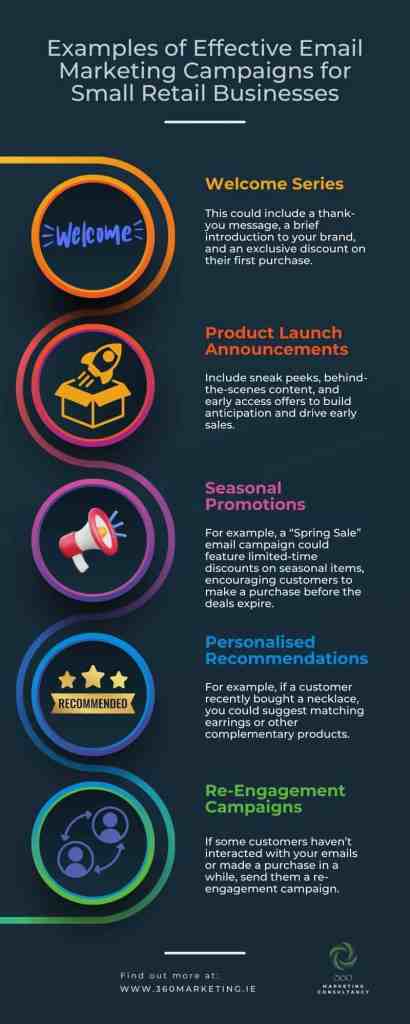
When it comes to creating email campaigns, personalisation and value are key. Here are a few examples of effective email campaigns that small retail businesses can use:
- Welcome Series:
- When someone subscribes to your email list, greet them with a series of welcome emails. This could include a thank-you message, a brief introduction to your brand, and an exclusive discount on their first purchase.
- A well-crafted welcome series sets the tone for your relationship and encourages immediate action.
- Product Launch Announcements.
- If you’re launching a new product or collection, create excitement by sending out a series of teaser emails leading up to the launch.
- Include sneak peeks, behind-the-scenes content, and early access offers to build anticipation and drive early sales.
- Seasonal Promotions.
- Use the changing seasons or holidays as an opportunity to offer special promotions.
- For example, a “Spring Sale” email campaign could feature limited-time discounts on seasonal items, encouraging customers to make a purchase before the deals expire.
- Personalised Recommendations.
- Based on previous purchases or browsing behaviour, send personalised product recommendations to your customers.
- For example, if a customer recently bought a necklace, you could suggest matching earrings or other complementary products.
- This type of campaign not only drives repeat purchases but also makes customers feel valued.
- Re-Engagement Campaigns:
- If some customers haven’t interacted with your emails or made a purchase in a while, send them a re-engagement campaign.
- Offer a special discount or simply ask if they’re still interested in hearing from you. This can help bring inactive customers back into the fold.
In summary, building and segmenting your email list allows you to target the right customers with the right messages. By implementing these effective email marketing campaigns, small retail businesses can nurture customer relationships, drive sales, and keep their audience engaged.
Common Mistakes to Avoid
Not Setting Clear Goals
One of the most common pitfalls in digital marketing is diving in without a clear understanding of what you’re aiming to achieve. Setting clear goals is essential for steering your efforts in the right direction and measuring success. Let’s explore why defining your goals is crucial and how to set them effectively.
The Importance of Defining What Success Looks Like for Your Business
Before you launch any digital marketing campaign, it’s vital to have a clear vision of what success looks like for your business. Without well-defined goals, you’re essentially shooting in the dark, hoping that your efforts will pay off. Clear goals provide direction, focus your resources, and allow you to track progress. They help you understand whether your marketing strategies are working or if adjustments are needed.
For example, if you’re a small retail business, success might mean increasing foot traffic to your physical store, boosting online sales, or growing your email subscriber list. Whatever your objectives, defining them upfront ensures that every action you take is aligned with achieving those specific outcomes.
Examples of SMART Goals for Digital Marketing

When setting goals, it’s important to make them SMART—Specific, Measurable, Achievable, Relevant, and Time-bound. SMART goals provide a clear roadmap and make it easier to track and assess your progress. Here are a few examples of SMART goals for digital marketing:
- Increase Website Traffic.
- Specific.
- Increase organic traffic to the website.
- Measurable.
- Achieve a 20% increase in organic traffic.
- Achievable.
- Based on past performance and current resources, this is a realistic target.
- Relevant.
- Driving more traffic to the website is key to generating more leads and sales.
- Time-bound.
- Achieve this goal within the next three months.
- Specific.
- Grow Email Subscriber List.
- Specific.
- Add more subscribers to the email list.
- Measurable.
- Increase the email subscriber list by 500 new sign-ups.
- Achievable:.
- With the current marketing tactics, such as offering a lead magnet, this target is attainable.
- Relevant.
- A larger email list will allow for more targeted marketing efforts and better customer engagement.
- Time-bound.
- Reach this goal within two months.
- Specific.
- Boost Online Sales.
- Specific:
- Increase the number of online sales.
- Measurable.
- Achieve a 15% increase in online sales revenue.
- Achievable:
- With upcoming promotional campaigns and improved product pages, this goal is within reach.
- Relevant.
- Increasing online sales is directly tied to the business’s revenue growth.
- Time-bound.
- Meet this target by the end of the next quarter.
- Specific:
By setting SMART goals, you establish a clear pathway to success. These goals not only guide your digital marketing efforts but also provide a benchmark against which you can measure your progress and make data-driven decisions. Without clear goals, it’s challenging to determine whether your strategies are effective or if you’re moving in the right direction.
Conclusion
A strong digital marketing strategy is more than just an added bonus for small retail businesses—it’s a critical component of success.
By increasing your store’s visibility, engaging with your local community, and nurturing a loyal customer base, a well-planned digital marketing approach can set your business apart in a crowded marketplace. It’s not just about keeping up with the competition; it’s about thriving in today’s digital age.
Are you ready to take your business to the next level?
Don’t wait—start building a powerful digital marketing strategy today. Begin your journey toward increased visibility, stronger customer relationships, and greater success!



Subscribe
Enter your email below to receive updates.